
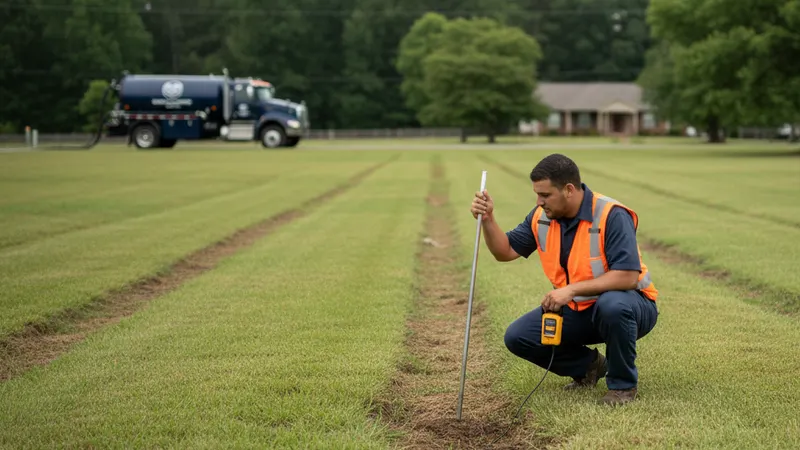
Drain Field Restoration — Dublin, GA & Laurens County
If your drain field is failing — soggy yard, sewage odors, or slow drains — we assess and restore it throughout Dublin and Laurens County. Drain field restoration can save you thousands compared to full replacement. Free site assessments, honest recommendations.
Dublin & Laurens Septic provides drain field restoration and septic drain field repair services throughout Dublin and Laurens County, Georgia. We assess and restore failing drain fields, leach fields, and septic field systems — often saving homeowners thousands compared to full replacement. Laurens County's dense red clay soil is one of the leading causes of premature drain field failure in middle Georgia — we assess every system honestly and recommend restoration only when it's the right solution.
What Is Drain Field Restoration in Dublin, GA?
Drain field restoration is the process of diagnosing and rehabilitating a failing septic drain field — also called a leach field — without the need for full system replacement. In Dublin, GA and Laurens County, septic field restoration typically involves relieving soil compaction, treating biomat buildup, and repairing distribution lines so effluent can once again absorb properly into the ground. A restored drain field can save homeowners $5,000 to $15,000 compared to installing a new system — which is why we explore restoration first whenever it's a viable option.
How Much Does Drain Field Restoration Cost in Dublin, GA?
Drain field restoration in Dublin, GA typically costs $800 to $3,500 depending on the extent of the failure and the treatment required — far less than a full drain field replacement at $5,000 to $20,000. Laurens County's heavy red clay soil restricts drainage and accelerates biomat buildup in leach fields, making early intervention the most cost-effective approach for Dublin-area homeowners. We provide a clear, upfront drain field repair cost estimate before any work begins.
Signs Your Drain Field Needs Repair in Laurens County
Septic drain field problems don't usually appear overnight — but by the time the signs are obvious, the failing drain field has often been developing for months. The longer it goes unaddressed, the more expensive the repair cost becomes. Watch for any of these warning signs on your Dublin or Laurens County property:
- Spongy, wet, or perpetually soggy ground over the drain field area, even in dry weather
- Green, unusually lush grass directly above the drain field lines (fertilized by effluent)
- Sewage odor outside the home near the drain field or tank area
- Slow drains throughout the house with no obvious clog
- Sewage surfacing or pooling on the ground above the drain field
- Multiple toilets or drains backing up simultaneously
Any of these signs warrants a same-day call. In Laurens County, drain field issues escalate quickly due to the dense clay soil conditions — don't wait on this. Contact us and we can often schedule a drain field assessment the same day for urgent situations.
Why Drain Fields Fail in Laurens County, Georgia
Laurens County's signature red clay soil is dense and has low permeability compared to sandy soils. This means effluent — the liquid that exits your septic tank — has a much harder time dispersing through the ground. Over time, this leads to saturation and eventually drain field failure. Understanding the specific causes in our area explains why we approach restoration the way we do — and why early intervention matters more here than in other parts of Georgia.
Common causes of drain field failure in Laurens County include:
- Overloaded tank: A tank that hasn't been pumped regularly sends solids into the drain field, clogging the absorption zones. This is the single most preventable cause of drain field failure.
- Heavy clay soil: Red clay restricts percolation and saturates more easily than sandy soils. When effluent can't move through the soil fast enough, it backs up toward the surface.
- Root intrusion: Tree and shrub roots grow toward the moisture and can break or clog distribution pipes, creating uneven flow and localized saturation.
- Age: Most drain fields have a lifespan of 20–30 years, and many rural Laurens County properties have older systems that have never been inspected or maintained.
- Compaction: Driving or parking vehicles over the drain field area compresses the soil and kills the aerobic bacteria that help treat effluent.
- Excessive water use: Large households, leaking fixtures, or water softener discharge can overwhelm the system's capacity and cause premature saturation.
Tree root intrusion is one of the leading causes of drain field failure in Laurens County. Roots from oak, willow, and pine trees can travel surprising distances seeking moisture, infiltrating septic drain field pipes and clogging the soil absorption area. If large trees are located anywhere near your drain field — even 30 to 50 feet away — they may be contributing to system failure. After drain field restoration, removing problem trees and grinding stumps eliminates the root system and prevents future damage. Tree Service Dublin can assess which trees pose the greatest risk and remove them safely without damaging your newly restored drain field.
How We Restore a Failing Drain Field in Laurens County
Drain field restoration is an alternative to full replacement — which can cost $5,000 to $20,000 or more depending on system size, soil conditions, and permitting requirements. Full septic system replacement in Georgia requires a permit through the Laurens County Health Department environmental health office. Restoration techniques aim to revive the soil's ability to absorb effluent without digging up and replacing the entire pipe network. When restoration works, it saves homeowners substantial money and disruption to their property.
Our restoration approach typically involves:
- Pumping the septic tank to relieve immediate overload pressure on the drain field
- Assessing distribution box flow and leveling if needed to ensure even load across all field zones
- Aerating compacted soil over drain field zones to improve oxygen flow and microbial activity — the anaerobic bacteria that treat effluent need oxygen to recover
- Hydro-jetting distribution lines where partial blockages are restricting flow to field zones
- Addressing any root intrusion or pipe damage found during assessment
- Percolation testing (perc test) of the soil after treatment to confirm absorption capacity has improved before the system returns to full use
- Advising on water usage changes and maintenance schedule to extend field life and prevent recurrence
Drain field replacement and restoration projects often require significant site preparation — especially if the failed field was compromised by soil compaction, standing water, or heavy vegetation. Clearing the area, removing brush and stumps, and properly grading the site are essential first steps before a new leach field can be installed. For Dublin and Laurens County properties requiring site work, Dublin Land Clearing provides forestry mulching, land grading, and brush removal to prepare your property for drain field restoration and ensure proper drainage from the start.
One of the most damaging things a homeowner can do to a drain field after restoration is allow vehicles to drive over it — compaction is one of the leading causes of drain field failure in the first place. Establishing a clearly defined driveway keeps traffic where it belongs and protects the restored system. If your property doesn't have a dedicated access road away from the drain field area, a gravel driveway installation is a smart follow-up investment. Dublin Gravel installs gravel driveways and access roads throughout Laurens County, helping property owners direct traffic away from sensitive underground systems.
Restoration vs. Full Replacement
Not every failing drain field can be restored — sometimes full replacement is the right answer. Our job is to give you an honest assessment of whether restoration is viable for your specific system and soil conditions, not to sell you a treatment that won't solve the problem.
Restoration is generally viable when:
- The drain field failure is relatively recent and hasn't fully saturated the soil through extended use
- The primary cause was an overloaded tank (since addressed by pumping)
- The soil permeability can be improved with aeration and a rest period
- The distribution system is functional and properly leveled
If full septic drain field replacement is necessary, we'll tell you directly and explain why — along with your options and honest cost expectations. We'd rather lose a job than take your money on a restoration treatment that has no chance of working.
Why Choose Dublin & Laurens Septic for Drain Field Restoration?
When your septic drain field is failing, you need a local company that understands Laurens County soil conditions and provides honest assessments. Here's what sets our septic field repair services apart:
- Free drain field assessment: We evaluate your septic field condition and give you an honest recommendation — restoration or replacement
- Laurens County red clay specialists: We know the local soil conditions and drain field challenges unique to our area
- Cost-effective drain field solutions: We restore failing drain fields when possible — saving you thousands compared to full replacement
- Complete septic drain field repair: From leach field repair and distribution box work to full leach field restoration and everything in between
- No upselling: If your drain field can't be restored, we'll tell you directly and explain why — we don't sell treatments that won't work
- Upfront drain field repair cost: Free estimates on all drain field restoration work before we start
Dealing with a failing drain field in Dublin or Laurens County? We'll diagnose the problem — whether it's a leach field failure, biomat buildup, or root intrusion — and recommend the most cost-effective solution for your property.
Assess, Diagnose, Restore — No Guesswork
Use the form below. We'll schedule a site visit — often same day for urgent situations involving sewage surfacing or active backups.
We assess the drain field surface, check distribution box flow, and inspect the tank condition. We look for root intrusion, compaction, and saturation patterns.
We tell you whether restoration is viable or if replacement is needed. No pressure, no manufactured urgency — just facts about your system and options for moving forward.
If restoration is the right call, we proceed with treatment, aeration, and any necessary repairs. We document everything and set you up with a maintenance plan.
Drain Field Questions — Answered
Common questions from Dublin and Laurens County homeowners about failing drain fields, septic field repair, and restoration costs.
Can a failing septic drain field really be restored?
In many cases, yes — whether restoration is viable depends on how far the failure has progressed, the soil conditions, and what caused the failure in the first place. In Laurens County, drain fields that failed primarily due to an overloaded tank — where the soil hasn't been completely saturated for years — often respond well to restoration treatments like aeration and biomat reduction. We assess each situation individually and give you an honest answer before any work begins.
What causes drain field failure in Laurens County?
The most common causes of drain field failure in Dublin and Laurens County are infrequent septic tank pumping (solids overflow into the field), the area's heavy red clay soil limiting percolation, system age (20–30 year lifespan as most leach fields), root intrusion from nearby trees, and soil compaction from vehicles parking over the field area. Most drain field failures are preventable with regular pumping and basic care — which is why we emphasize maintenance schedules with every customer we serve.
How much does drain field restoration cost vs. replacement?
Full septic drain field replacement in Georgia typically runs $5,000 to $20,000+ depending on system size, soil conditions, and permitting through the Laurens County Health Department. Drain field restoration, when viable, typically runs $800 to $3,500 depending on the treatment required — a fraction of replacement cost. We give you an upfront estimate before any work begins. If restoration isn't viable for your Laurens County property, we tell you honestly.
How long does drain field restoration take?
The on-site work for drain field restoration typically takes a few hours. However, the soil needs time to recover after treatment — usually several weeks to a few months depending on conditions. We advise homeowners in Dublin and Laurens County on water usage during the recovery period to maximize the restoration's effectiveness and give the soil biology time to re-establish.
How do I prevent drain field failure?
Pump your septic tank every 3–5 years (sooner for larger households or older systems), avoid putting grease or wipes down the drain, don't park vehicles over the leach field, keep trees and large shrubs at least 30 feet from the field area, and spread laundry loads throughout the week. These habits significantly extend the life of most Laurens County drain fields and can help you avoid costly leach field repair.
Get a Drain Field Assessment
Worried about your drain field? Fill out the form below. We can often schedule a same-day assessment for urgent situations.
Get Free Quote
Use our online request form — we respond fast, usually same day. For 24/7 emergencies, we're always available.
Request a Quote